

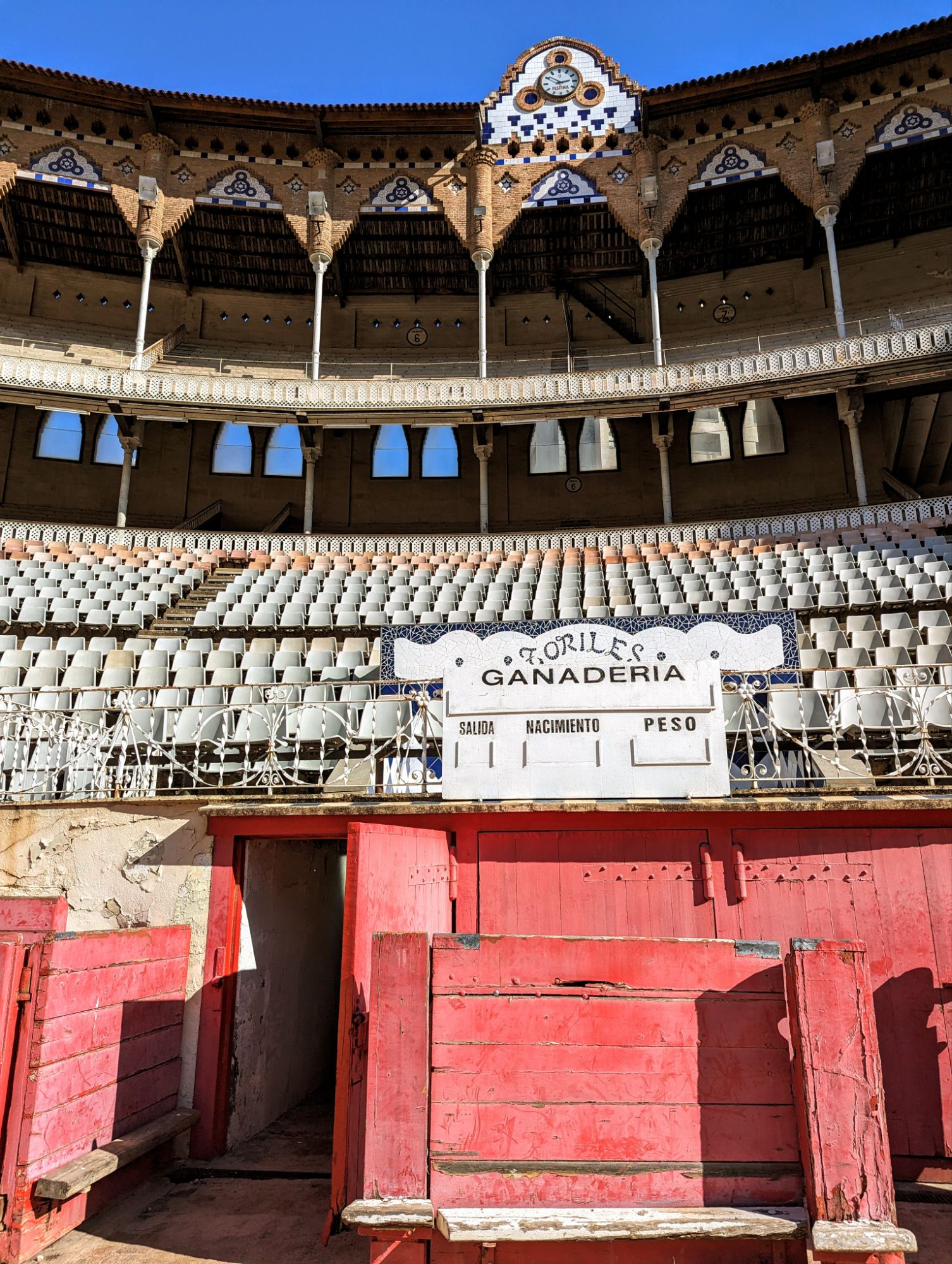
One of the things I love about traveling, is stumbling upon something that you hadn’t planned to explore and having it turn out to be one of the best parts of the trip. On our recent soujourn to Spain, while I was dragging my family through the streets of Barcelona, we came upon the Plaza de Toros Monumental or simply La Monumental as the locals say it. The building itself is striking, with giant egg shaped spheres dominating the roof line and honestly at first glance, I assumed it was a synagogue or some other place of worship because the blue and white tiled exterior. It is a beautiful building on it’s own, built in a Byzantine style and is one of the largest bullrings in the world. It was the last commercial bullfighting arena in operation in Catalonia Barcelona though it hasn’t seen the blood of a bull spilt upon it’s sanded floor since 2011.
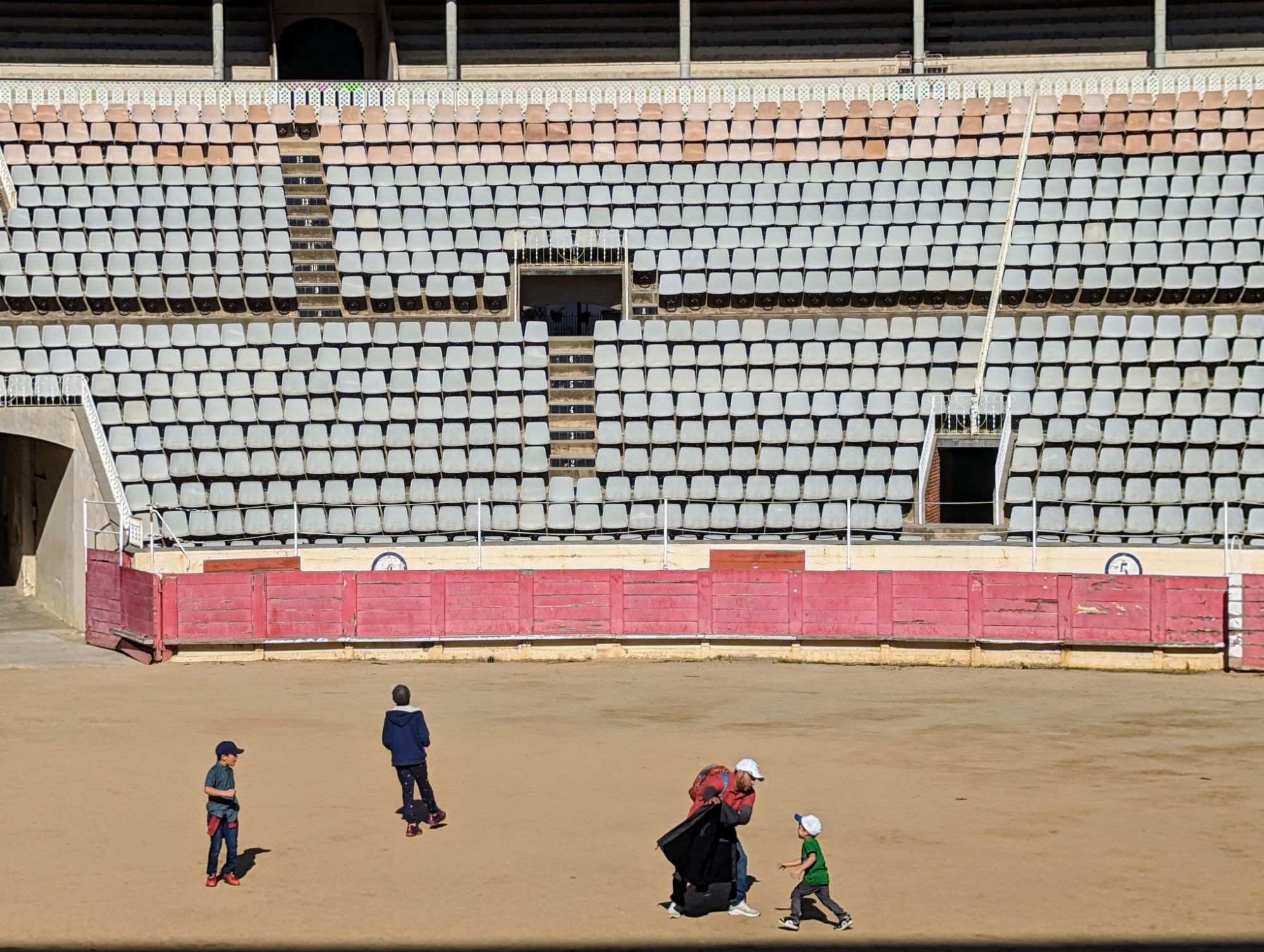
La Monumental is run as a museum now and once admission is paid, you are pretty much allowed to wander wherever you desire within its walls. There’s not much signage around so whatever history one cares to learn is obtained mostly via a google search, but I appreciated the lack of rules dictating what we could or could not do, an annoying theme which seems to permeate a lot of America’s tourist spots, and which thankfully, is mostly non existent in Spain. My boys ran up and down the concrete steps and pretended to be matadors in the sandy arena and no one batted an eye.

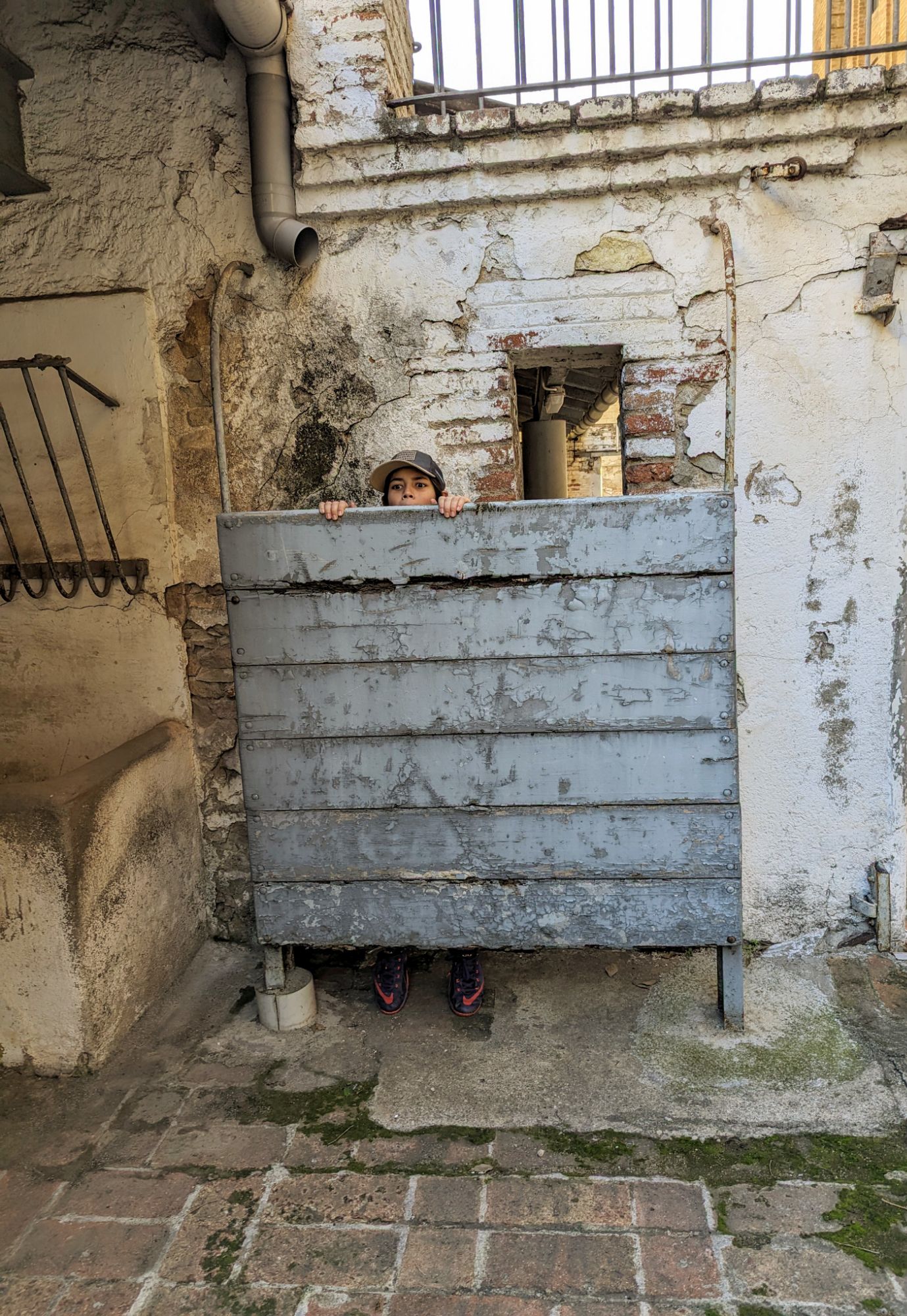
After soaking up the sun in the bullring, it was time to explore the antechambers, the rooms where the bulls were kept prior to being brought out to fight in the arena. Here, it was more apparent how massive and dangerous Toro Bravos could be, as the huge metal doors which they had been cloistered behind were dented and dinged up and all around the room were scratches upon the walls from horns. In the outside rooms, where the bulls were watered and fed, there are solid wooden walls located in every corner, put there so a trainer could hopefully escape whatever angry bull had it in for him that day.
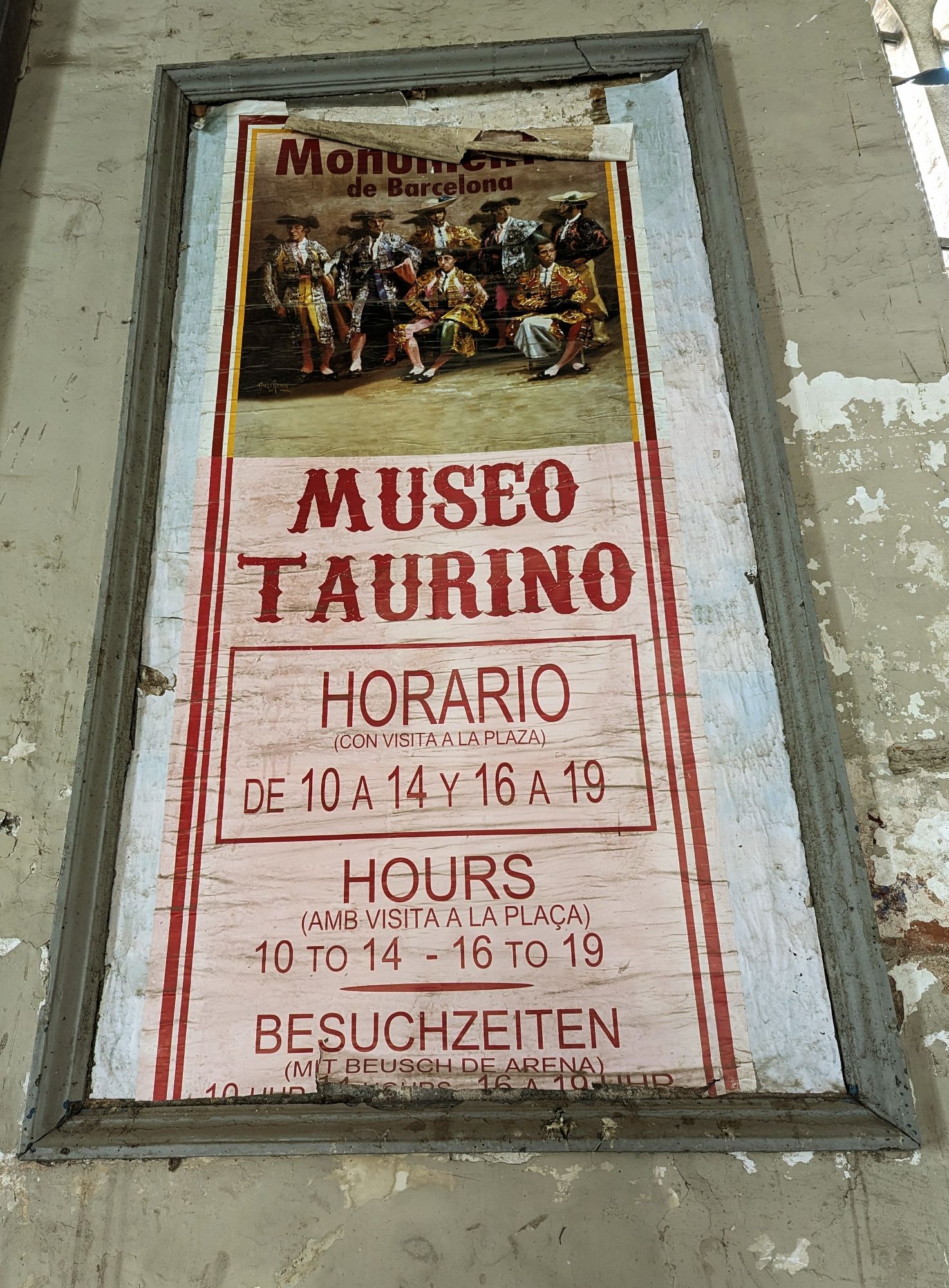
After we were done exploring the grounds, we headed to the small museum located in a side building where the history of La Monumental’s glory days were on display. One of my favorite things to look at was all the ornate Matador costumes and how they evolved thru the ages. The details and color were so vibrant and only got more so with each decade. There are also quite a few bull heads mounted on the walls, with plaques dedicated to the bulls bravery and a history of their valiant death. This did actually disturb Huck quite a bit and he commented, rightly so I think, that killing the bull, seemed a bad way to honor such a brave animal. While he’s not wrong, I did point out, that even now, decades later, we know that bull’s name and what he looked like and so, in a way his death in the bullring has made him live longer. Not many of us humans even get to say that, as often our stamp upon this world is erased along with the skin on our bones, but for these Toro Bravos, their brown eyes shine on in a final victory over the long forgotten bullfight. In the end then, it’s really the bulls who won the fight, claiming a facade of immortality, while the Matadors are slowly forgotten, victims to a bygone era and that old relentless enemy; time.

The Plaza de Toros Monumental
Gran Via de les Corts Catalanes 749
L’Eixample 08013 Barcelona, Spain
Open Monday thru Saturday 10am-2pm and 4pm-7pm
*This blog is dedicated to Ferdinand the flower smelling bull*

 Pocket Change Adventures